
Thermal Conductive Silicone Cloth Reduces Burr Cut-Through Risk in Thin Insulating Interfaces
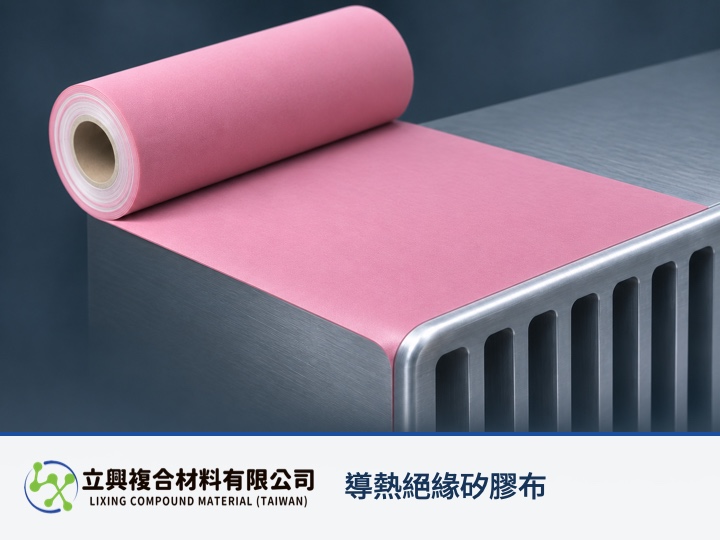
When a power device is clamped to a heat sink, a metal burr can shorten the local insulation path. Thermal conductive insulating silicone cloth gives power electronics a thin heat-transfer path with fiberglass reinforcement. The sheet must extend intact across sharp edges, while thickness is selected against the real edge condition, pressure and dielectric requirement.
Fiberglass reinforcement supports the sheet during assembly
The sheet is less likely to lose coverage under ordinary handling and fastening loads. The official product page states that it contains an internal fiberglass layer and has tensile strength above 150 Kgf/cm². That value supports the reinforced construction; it is not a guarantee of puncture resistance against a sharp burr.
A 0.2–1.0 mm range fits thin interface spaces
The material can sit between TO-220-class power semiconductors and heat sinks where space is limited. The product specification lists a 0.2–1.0 mm thickness range and customizable dimensions. Visible burrs still need removal before samples are chosen around clamp pressure, flatness and insulation distance.
Thermal and dielectric data can be reviewed together
The product page lists thermal conductivity from 0.8 to 3.0 W/m·K and withstand voltage above 4 kV, supporting power modules that need heat transfer and electrical separation. Dielectric breakdown strength in the finished assembly still depends on edge condition and test method, so the product-level data must be verified in context.
E = V/d explains why a burr changes the decision
The uniform-field relationship is E = V/d. E is ideal uniform electric-field strength in V/m, V is potential difference in V, and d is effective separation along the field in m. At the same voltage, a burr that shortens the local distance increases the field in this model. A real tip creates a nonuniform field affected by curvature, voids, pressure and interfaces, so the equation frames a trend and does not replace dielectric testing or creepage design.
Describe the edge and clamping conditions when requesting samples
Provide working voltage, available thickness, metal-edge condition, clamp pressure, dimensions and temperature range. Engineers and buyers for power supplies, motor controllers and automotive electronics can choose conductivity and thickness from the official thermal silicone cloth specification, then verify burr removal, insulation distance and withstand performance in the actual assembly.
#ThermalSiliconeCloth #PowerElectronics #ElectricalInsulation #ThermalManagement #BurrRisk