
Thermal Conductive Silicone Cloth Mounting Torque: Reading TO-220 Thermal Impedance Through Preload
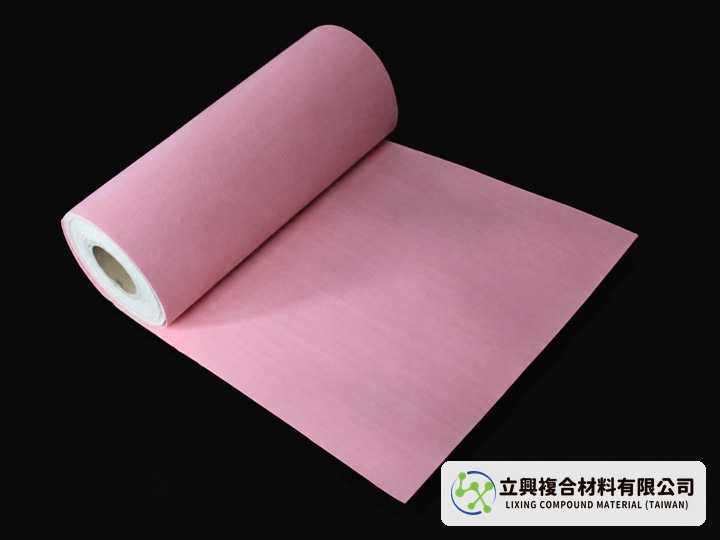
When a Thermal Conductive Silicone Cloth is clamped between a TO-220 power device and a heat sink, its thermal impedance follows the preload the screw actually delivers, and the number on the torque wrench is just the starting point. Lixing's cloth offers 0.8 to 3.0 W/m·K thermal conductivity and withstand voltage above 4 kV, with a glass fiber layer that holds up under mounting pressure, so power supply and motor controller engineers can focus on torque settings and temperature-rise checks.
Same Torque, Different Case Temperature
A production line can tighten every screw to the same torque and still see different case temperatures. Thread lubrication and screw plating change how much of the torque turns into preload, and so does the washer surface. When the clamping force on the cloth changes, interface contact changes with it.
A fixed reading order helps: estimate preload, convert it to interface pressure, then confirm thermal impedance with a temperature-rise measurement after assembly.
Four Product Benefits That Make Mounting Easier to Judge
Fiberglass Reinforcement Resists Damage During Tightening
As the screw tightens, device edges and the heat sink surface pull and press on the interface material. The Thermal Conductive Silicone Cloth integrates an internal glass fiber layer, and the product page lists tensile strength greater than 150 Kgf/cm² with stable structure during installation and long-term use.
Withstand Voltage Above 4 kV Keeps Isolation Under Clamp Load
The metal tab of a power device often carries a live potential, so the interface material doubles as the insulation layer. The product page lists withstand voltage above 4 kV and high volume resistivity, which suits it as an electrically insulating thermal pad for power devices.
Defined Hardness and Thickness Support Pressure Estimates
The product page lists hardness of 70 ± 5 Shore A and a thickness range of 0.2 mm to 1.0 mm. It fits applications that clamp the interface with screws and need a predictable bondline, and thickness can be customized to the interface design.
Selectable Conductivity Grades Match the Heat Load
Thermal conductivity spans 0.8 to 3.0 W/m·K, the working temperature is -30°C to 200°C, and the flame rating is UL 94 V-0 / V-1. Higher heat loads can move to a higher conductivity grade, with the torque setting taking care of contact.
Where It Is Used: Power Supplies, Motor Controllers and Automotive Electronics
Power supplies often fasten TO-220 MOSFETs and diodes to a heat sink with a single screw, and motor controller power stages do the same. The cloth can be cut to roughly the device footprint so one piece handles both heat transfer and insulation. Automotive control modules need a wide temperature window, and the -30°C to 200°C working range is a reasonable starting point for selection.
Formula: Estimating Preload From Torque
NASA's Fastener Design Manual (RP-1228) gives the common short-form relation between torque and preload:
T = K × D × F
- T: tightening torque, N·m
- K: nut factor (torque coefficient), dimensionless, varies with lubrication, plating and thread condition
- D: nominal bolt diameter, m
- F: axial bolt preload, N
The torque wrench sets T, but the cloth is clamped by F. Dividing F by the device footprint gives interface pressure, and thermal impedance data for pads are measured at a stated pressure, so compare impedance values at similar pressures. Source: NASA Technical Reports Server: Fastener Design Manual.
The relation is empirical and K scatters widely, so it estimates preload and nothing more. It cannot predict the cloth's thermal impedance and ignores pad stress relaxation, package deformation and uneven load between screws, so confirm thermal impedance by measurement after assembly.
Three Steps to Read Real Thermal Impedance
- Record torque, screw size and lubrication, then estimate a preload range with the formula.
- Divide preload by the device footprint and compare it with the test pressure in the material data.
- After assembly, measure case and heat sink temperatures at a fixed power; the temperature difference divided by power is the real thermal impedance, which tells you whether to adjust torque or thickness.
For how interface contact resistance is measured, see the thermal silicone cloth contact resistance and ASTM D5470 guide.
What to Send With a Sample Request
- Device package and footprint size
- Screw size and torque setting
- Required thickness and conductivity grade
- Voltage requirement and working temperature
Conclusion
Reading mounting torque as preload and interface pressure gives thermal impedance checks a common baseline. Lixing's Thermal Conductive Silicone Cloth uses fiberglass reinforcement to carry the clamp load and withstands more than 4 kV, a good fit as an insulating thermal pad between TO-220 power semiconductors and heat sinks. Contact Lixing at yw@zh-lx.com for samples or a specification consultation.
#ThermalSiliconeCloth #TO220 #MountingTorque #ThermalManagement #ThermalInterfaceMaterial