
Nickel-Graphite vs Silver-Filled Gaskets: Compare Like-for-Like Shielding
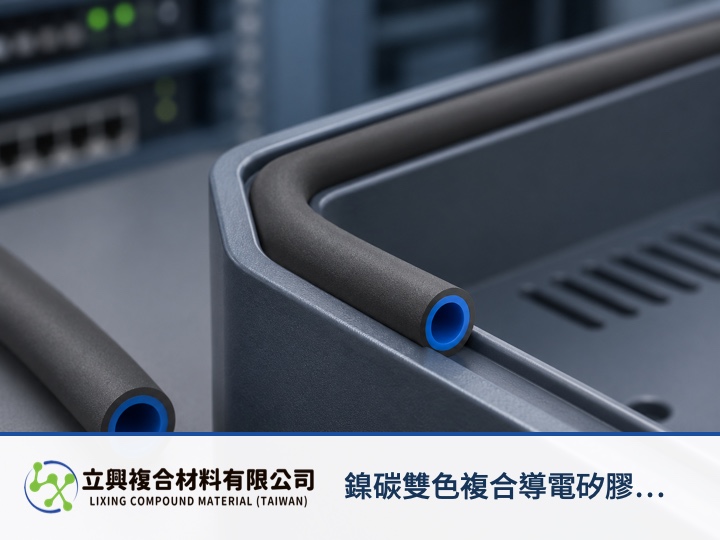
For a datacom enclosure, compare nickel-graphite and silver-filled conductive gaskets only after aligning frequency, field type, compression state, and environmental conditions. The nickel-graphite co-extruded conductive silicone gasket uses a conductive outer layer around a resilient non-conductive silicone core, giving enclosure seams an EMI contact path and a moisture-sealing structure. This article turns that verified construction into a practical sourcing comparison.
Compare shielding data at the same frequency and field type
Filler names do not predict installed enclosure performance. The product page reports separate values at 200 kHz H-field, 100 MHz E-field, 2 GHz plane wave, and 10 GHz plane wave. A silver-filled candidate tested with another fixture or frequency needs equivalent documentation before its dB number can be ranked beside the nickel-graphite option.
Co-extrusion separates electrical contact from elastic sealing
The nickel-graphite outer layer supplies the conductive contact surface, while the resilient silicone core supports moisture sealing and mechanical fit. This division gives enclosure engineers a defined structure for discussing the electrical path and groove fit. The verified product data lists volume resistivity at ≤ 0.1 Ω·cm and hardness at Shore A 65 ± 5, useful inputs for a prototype comparison.
Outdoor enclosures add environmental constraints
Marine and salt-spray equipment enclosures need both shielding and a profile that remains suitable for the operating environment. The product page describes salt-spray and fungal resistance, a continuous temperature range of -55°C to 160°C, and custom profile options. These statements can frame sample requirements; service life still depends on groove tolerance, compression, contact surfaces, and exposure.
The equation shows why test configuration matters
NIST technical literature defines shielding effectiveness by power ratio: SE = 10 log10(Pref/Pshielded). SE is in dB, Pref is received power in the reference configuration, and Pshielded is received power with shielding in place; both powers are in W. Apply it only at the same frequency, field type, fixture, and measurement position. It does not make results from different compression states interchangeable. See NIST Technical Note 1377.
Put four conditions on the sample request
- Target frequency range and H-field, E-field, or plane-wave condition.
- Groove profile, available compression space, and contact-surface finish.
- Moisture, salt spray, cleaning chemicals, and operating temperature.
- Like-for-like measurements using the same fixture and compression condition.
Datacom and marine-equipment teams can shorten the comparison by supplying frequency, groove dimensions, compression space, and environment with the sample request. The nickel-graphite co-extruded profile provides a clearly divided conductive outer layer and resilient sealing core; final selection should follow comparable shielding data and prototype fit results.
#NickelGraphite #EMIShielding #ConductiveSilicone #EnclosureSealing #MaterialSelection