
Select Silicone Foam Seals by Density and Firmness
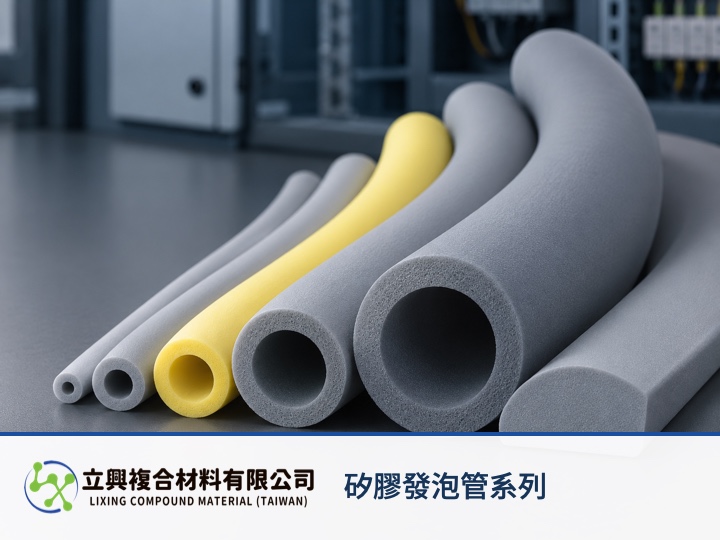
Electronics and appliance enclosures need sealing, cushioning, and thermal insulation from the same profile. The Silicone Foam / Sponge Strip & Tube Series provides uniform foaming and resilient recovery for that role. Selection works better when density and firmness are treated as separate inputs, then checked against profile geometry, target compression, and the service environment.
Density range makes foam grades easier to compare
The product page lists a specific gravity or density range of 0.65–0.90 g/cc. Density describes mass per unit volume and provides one reference for comparing samples within the series. It does not describe tactile firmness by itself, and it cannot predict sealing force after compression.
28 ± 3 Shore A adds a separate hardness coordinate
The listed hardness is 28 ± 3 Shore A. Recording this value separately from density helps engineers avoid treating a denser grade as automatically firmer. A useful comparison keeps specimen condition, thickness, and the test method consistent.
Uniform foam and resilience support enclosure sealing
Official product information describes uniform foam density, close surface tolerance, high resilience, and compression resistance. These attributes suit sealing, cushioning, and thermal insulation parts in electronics and appliances, including weather sealing for outdoor power-distribution and telecom enclosures. The page also lists a -100°C to +300°C temperature range and a 94V-0 flame rating; any design still needs confirmation of the applicable grade, test conditions, and assembly.
The engineering equation defines density only
The NIST mass-density definition is ρ = m / V, where ρ is mass density in kg/m³, m is specimen mass in kg, and V is specimen volume in m³. ISO 845 covers apparent density measurement for cellular plastics and rubbers. The equation applies when mass and volume are measured reliably. It does not calculate compression force, recovery, or long-term sealing performance.
Sample decisions return to profile and compression
A useful sample request states the groove or contact profile, intended compression, service temperature, and flame requirement. The 0.65–0.90 g/cc density range and 28 ± 3 Shore A hardness can then be compared under matching conditions. Review the Silicone Foam / Sponge Series product data and contact Lixing Compound Material Co., Ltd. for available forms.
Build a traceable basis for seal selection
Outdoor power and telecom enclosures benefit from a seal material with uniform foaming and resilient recovery. Density describes mass per unit volume, while hardness provides an indentation-response coordinate. Combining both with profile geometry and compression conditions gives engineers and buyers a clearer sample comparison.