
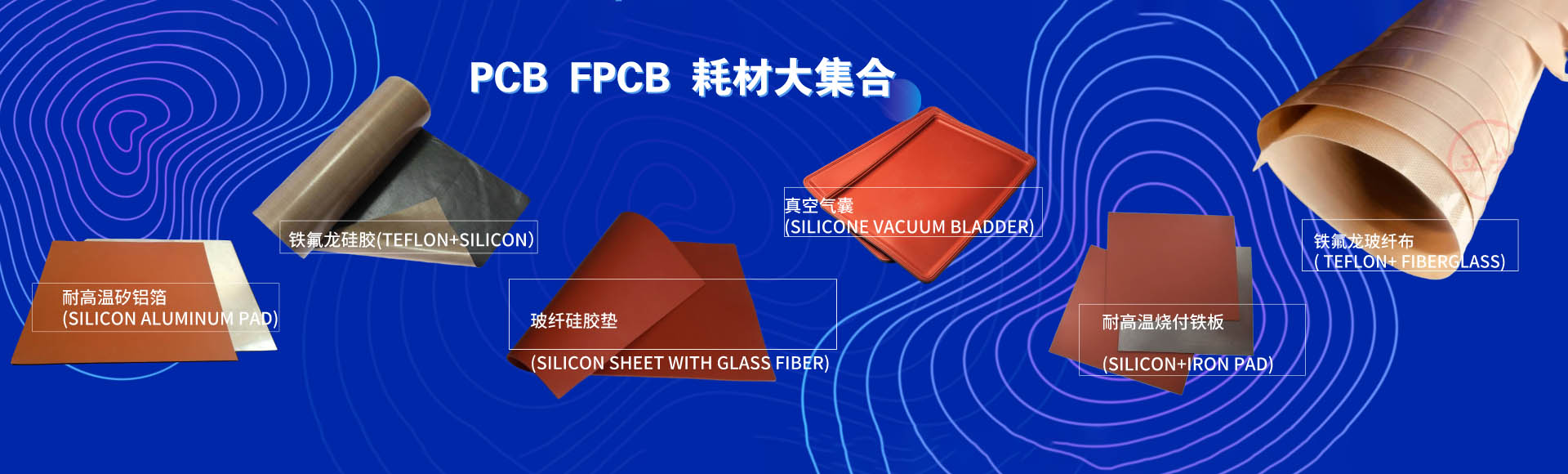
Silicone Aluminum Foil Pad or Steel Pad for FPC Pressing? Select by Cushioning and Flatness
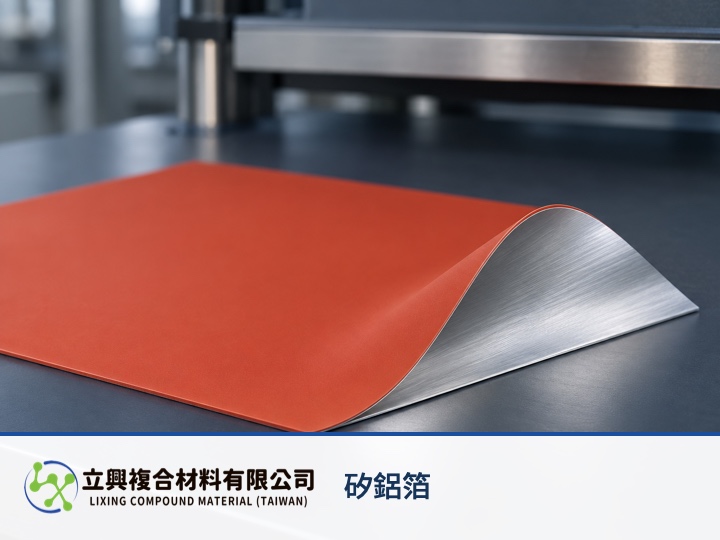
When an FPC quick-press station needs both gap-filling cushion and a flat supported interface, a silicone aluminum foil pad combines foil stiffness with silicone elasticity in one sheet. For precision circuit lamination plants, the decision starts with the station's role: a compliant process consumable that follows circuit height variation or a fixed machine structure. This article addresses the first case.
Foil support helps the thin sheet stay flat
The silicone aluminum foil pad uses aluminum foil as its supporting substrate. The product page lists an operating pressure of 80 to 150 kgf/cm². This construction suits FPC stations that need a thin sheet to lie against the platen while retaining a compliant silicone face; the actual pressure still requires validation with the press and stack-up.
The silicone face provides cushioning and gap filling
The product page identifies gap filling and molding as core functions. It lists a thickness range of 0.4 to 0.6 mm and silicone hardness of 55 ± 5 Shore A. These values establish a sampling range, while FPC stack-up, copper thickness, and post-press appearance still require process trials.
Temperature and service life remain process-dependent
The listed temperature resistance is above 280°C, with a recommended long-term operating range of 160°C to 250°C. The typical service life is approximately 6,000 to 8,000 cycles under normal operation and varies with parameters. A high-changeover line can evaluate replacement frequency, cleaning, and press conditions together.
Fourier's law defines the limit of heat-spreading reasoning
Fourier's law of heat conduction is q'' = -k(dT/dx). Here q'' is heat flux in W/m², k is thermal conductivity in W/(m·K), and dT/dx is the through-thickness temperature gradient in K/m. The model applies to conduction in a continuum and the minus sign indicates heat flow from hot to cold. It excludes contact resistance, pressure distribution, transient heating, and aging, so it is not a measured or guaranteed value for this product.
Separate the roles of foil pads and steel pads
- For a thin compliant layer that follows height variation, evaluate the foil pad's thickness, hardness, and flat installation.
- For fixed machine support or a specified steel structure, evaluate a steel pad against the press maker's requirements.
- For sampling, provide temperature, pressure, dwell time, FPC stack-up, platen size, and acceptable replacement frequency.
For FPC hot pressing that needs cushioning and heat spreading, the product data provides traceable thickness, hardness, temperature, pressure, and service-life ranges. Procurement and process engineers can submit the actual press conditions, then verify flat contact, molding, and post-press appearance before selecting the station material.
#SiliconeAluminumFoilPad #FPCLamination #PressingMaterials #CushionPad #ProcessSelection