
V-0 Conductive Foam for Shielded I/O Enclosure Seams
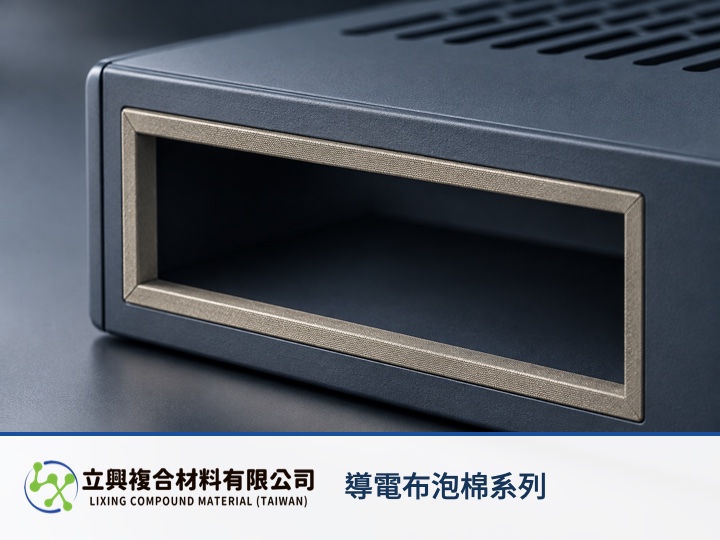
LXD Conductive Foam Series gives enclosure I/O seams a compliant contact surface for grounding, EMI shielding, and flexible gap filling, with an optional version specified to meet UL 94 V-0 where flame-retardant material is required. Selection should combine shielding band, surface resistance, real gap, compression, specimen thickness, and model-specific test evidence.
A flame-retardant option for crowded I/O seams
AI accelerator modules, AI server enclosures, optical transceiver cages, panel openings, and I/O connector perimeters can require electrical contact and tolerance take-up in the same narrow seam. Supplier information supports an optional version that meets a UL 94 V-0 flammability rating. It does not establish a public UL listing, file number, or complete-enclosure fire conclusion for this product.
UL's public overview of UL 94 explains that V-0, V-1, and V-2 concern vertically oriented specimens exposed to a controlled flame, with classification considering extinguishing time and flaming drips. Thickness, conditioning, and evidence for the ordered model remain part of the decision.
Conductive fabric carries shielding and grounding contact
The product page describes a composite of conductive fabric, conductive foam, and conductive pressure-sensitive adhesive. Published values include shielding of at least 30 dB from 10 MHz to 1000 MHz, horizontal surface resistance no greater than 0.1 Ω, and vertical surface resistance no greater than 0.2 Ω. Enclosure results still depend on mating surfaces, seam length, and assembly.
Custom thickness takes up the mechanical gap
The foam core provides flexible gap filling and compression recovery, while total thickness can be customized. Engineers can map the gap around an I/O panel or cage before setting sample thickness and compression range.
Use heat release rate to frame the flammability limit
Fire engineering uses Q_dot = m_dot_f × Δh_c, where Q_dot is heat release rate in kW, m_dot_f is fuel mass burning rate in kg/s, and Δh_c is effective heat of combustion in kJ/kg. The NIST-hosted engineering reference uses this relation to connect mass consumption and released energy. It is neither a UL 94 classification equation nor a measured value for this product.
Put four conditions on the sample request
- State the real gap and contact length around the enclosure I/O, optical cage, or connector.
- Provide thickness, width, die-cut profile, and adhesive configuration.
- Define the shielding frequency band and grounding measurement method.
- When V-0 is required, request the matching model, tested specimen thickness, and test documentation.
To sample one material for flame-retardant selection, EMI shielding, and assembly tolerance, review the Conductive Foam Series product page and contact Lixing Composite Materials Co., Ltd. with the seam dimensions and evidence requirements.