
Transparent PET Tape with Ball No. 18 Initial Tack for Fast Positioning
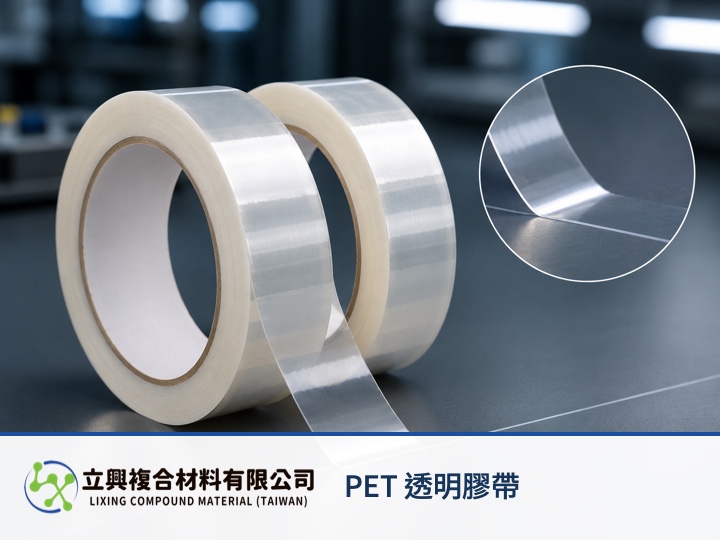
When a component must stay put as soon as the tape touches down, Transparent PET Tape offers a listed initial-tack result of Ball No. 18 for immediate grip, while its clear 50 ± 2 μm profile keeps alignment marks visible. Engineers should still trial the actual substrate and record force, loaded area, and dwell time so that fast positioning becomes a repeatable process condition.
Ball No. 18 helps parts stay in position
Initial tack describes the first grip established when the adhesive meets a surface. The official product page lists a requirement of Ball No. 14 or higher and an inspection result of 18. This supports a fast-positioning use case, but the page does not disclose the full test-method revision or environmental conditions, so the number should not be used for an uncontrolled supplier-to-supplier comparison.
A clear thin profile keeps the target visible
Visible reference lines reduce the need to lift and reposition tape. The product page lists a 0.038 mm PET backing, a 0.012 mm adhesive layer, and a total thickness of 50 ± 2 μm. Its clear surface supports alignment and inspection around precision electronic parts. The official product specifications provide a starting point for confirming roll width, length, and thickness during sampling.
Pressure-sensitive construction suits short-cycle placement
The product page describes a PET film combined with a pressure-sensitive adhesive and identifies precision electronic-part fastening, hot-press process protection, and industrial packaging as uses. Initial tack can secure the first placement. Suitability for long-duration loads, curved surfaces, or substrates with different surface energies still needs verification under the intended conditions.
Document application conditions with average pressure
The OpenStax pressure relationship is p = F / A. Here, p is average contact pressure in Pa, F is normal applied force in N, and A is loaded contact area in m². Spreading the same force over a larger area lowers average pressure, so a trial record should identify the tool, force, and area together. This engineering model does not represent PSA viscoelasticity, surface energy, roughness, or dwell time, and it cannot predict Ball No. 18 tack, peel strength, or residue.
Position first, then verify downstream conditions
Precision fastening and lamination protection both benefit from limiting slip at first contact. Clean the actual substrate, apply the tape with a controlled tool and cycle, then observe edge lift and position shift. For heated processing, continue with the article on heat resistance and thin-profile alignment. If downstream removal is the main concern, review fast and slow peel with clean removal.
Bring three application details when requesting a sample
Provide the substrate, actual bonded area, and application method, together with process temperature and expected dwell time. Lixing Composite Materials Co., Ltd. can use these inputs to review the Transparent PET Tape specification and sampling route. The website does not offer online checkout; contact the team for samples or specification support.