
Custom Shaped Silicone Tube Bending: Keep the Profile Working Around Curves
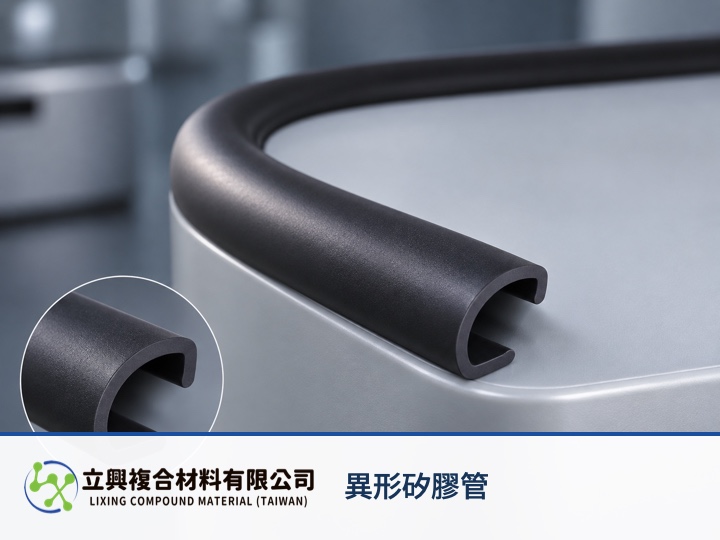
A custom shaped silicone tube can carry sealing, covering, or flow geometry through a continuous extrusion, even when the equipment route turns. Predictable fit around a curve starts with the profile, wall thickness, material hardness, and intended bend radius on the same drawing, followed by a sample check for local distortion.
Put the mating geometry into the extrusion
Custom shaped silicone tubing can be made as round, square, rectangular, hollow, or more complex profiles from a customer drawing. Grooves, lips, and multi-cavity forms can follow a component boundary where standard round tubing would leave an unwanted gap. Dimensions and tolerances still need drawing and sample confirmation.
Use flexibility to follow a routed path
The product page lists a hardness range of 30-80 Shore A and typical elongation at break of 200%-500%, and describes a soft tube that can bend. These catalog ranges are useful starting points for a formulation and geometry discussion. Finished bending behavior also depends on asymmetric profile geometry, wall thickness, and curing method, so hardness alone does not define the result.
Keep one profile concept across temperature zones
The listed temperature range is -45°C to 200°C, with platinum-cured and peroxide-cured options. Electronics, appliance, and kitchenware structures that combine a curved route with temperature change can use the material and profile options on the product page to narrow the sample, then verify it under the actual medium, contact, and cycling conditions.
Relate bend radius to outer-fiber strain
For small-deformation beam bending, epsilon = y / rho describes the trend. Epsilon is bending strain at a distance y from the neutral axis, y is measured in m, and rho is the neutral-axis radius of curvature in m. A smaller radius raises outer-fiber strain, so lips or outer walls farther from the neutral axis deserve attention. The relation follows bending theory in MIT OpenCourseWare Mechanics & Materials I. It assumes small deformation and plane sections, excludes large-strain silicone behavior, warping, and viscoelasticity, and does not specify an allowable bend radius for this product.
Review the passage and the fit on the same sample
During a bend check, look for inner-wall wrinkling, excessive outer-wall stretch, an opening groove, or narrowing in a hollow passage. A sampling drawing should state profile dimensions, wall thickness, straight length, bend direction, target radius, mating component, and working temperature. Add medium and pressure when the tube carries fluid.
Start with a drawing that reduces fit iterations
Lixing Composite Materials Co., Ltd. can discuss profile, color, hardness, and curing method from a drawing. Use the custom shaped silicone tube product page to request specifications or a sample, then verify the design in the actual assembly and bend path.
#CustomSiliconeTube #SiliconeExtrusion #ProfileTubing #BendDesign