
FPC Lamination Buffer Pad Heat Transfer: One Pad That Cushions Pressure and Carries Heat
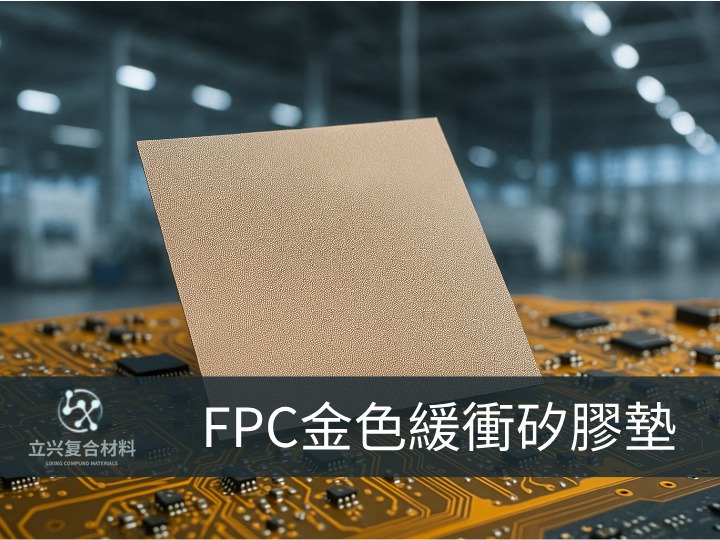
If your FPC hot press has to cushion pressure and still pass heat, the FPC Lamination Silicone Buffer Pad handles both in one sheet: its multilayer composite includes a high-temperature heat-conductive fluororesin layer under a PTFE nano-coating release surface, rated to 280°C and above 45 Kg/cm². When you evaluate a switch, treat the pad as one thermal resistance in the stack, compare it with your current kraft paper count in the same equation, then log one thermocouple heat-up curve at the stack center to decide whether the press recipe needs adjusting.
The Cushion Layer Sits in the Heat Path
Heat leaves the platen and passes through the steel plate, the cushion and the release material before it reaches the FPC panel. The cushion spreads pressure over circuit height differences, and it is also a layer every joule has to cross. A traditional stack of several kraft paper sheets adds one more layer and one more contact interface with each sheet, so the moment the panel reaches temperature can shift too.
Engineers often tune pressure distribution first and only then notice that the heat-up curve has moved. Estimating the cushion as one resistance term before the trial, then confirming by measurement, saves a round of trial presses when the material changes.
Four Product Features That Make the Stack Easier to Control
A Heat-Conductive Fluororesin Layer Keeps a Path for Heat
One pad covers both cushioning and heat transfer. According to the product page, its core is a multilayer composite of high-elasticity fluororesin fiber fabric, high-temperature heat-conductive fluororesin and high-tensile fluororesin fiber fabric. The page does not publish a thermal conductivity value, so request the figure through a specification inquiry.
Rated to 280°C for High-Temperature Lamination
When the platen runs hot, the cushion has to survive the temperature first. The product page lists a 280°C temperature rating and precision lamination of PCBs, FPCs, rigid-flex boards and IC substrates.
85 – 90 Shore A with Above 45 Kg/cm² Pressure Resistance
A firm FPC pad loses less pressure inside the cushion layer. Hardness is 85 – 90 Shore A and pressure resistance exceeds 45 Kg/cm², which the product page links to uniform lamination pressure; check the full buffer pad specification table against your current press settings.
PTFE Nano-Coating Release, Approximately 600 Cycles
A reusable pad removes one consumable that changes with every batch. The release layer is a PTFE nano-coating, and the product page lists a service life of approximately 600 cycles depending on the process; the pad is designed to replace traditional kraft paper and silicone pads.
Where It Is Used
Hot-press stacks for FPCs and PCBs are the main use, and the product page also lists rigid-flex boards, IC substrates, HDI and high-frequency/high-speed boards. Lixing suggests pairing it with a silicone iron pad for structural support and even heat, or adding an FPC green cushioning pad for local pressure compensation. For the pressure side of the same stack, read our earlier article on pressure transfer with this gold buffer pad, then layer the heat path on top.
Estimate the Cushion's Effect on Heat-Up with Series Resistance
A steady, multilayer series conduction model lets you compare stack-ups: P = A × ΔT / (L1/k1 + L2/k2 + ... + Ln/kn). Each layer's L/k is its R factor, and in series the R factors simply add, as shown in OpenStax University Physics Volume 2, Section 1.6 Mechanisms of Heat Transfer.
- P: heat flow rate through the stack (W)
- A: heated area (m²)
- ΔT: temperature difference between platen side and board side (°C or K)
- Li and ki: thickness (m) and thermal conductivity (W/m·°C) of layer i
A larger total R means less heat flow for the same temperature difference, so the panel heats more slowly. Replacing several kraft paper sheets with one pad changes both the number of layers and each layer's L/k, so heat-up should be rechecked after the switch.
The model only covers one-dimensional, steady conduction through flat layers of equal area in full contact. Hot pressing is a transient heat-up, and the model leaves out interface contact resistance, thickness change under pressure and edge losses. The product page publishes no conductivity or thickness for this pad, so the equation supports relative comparison only; it cannot predict heat-up time and is not a product specification or a guarantee of lamination results.
What to Prepare Before Sampling
- Platen set temperature, heat-up time and dwell pressure
- Current stack order, plus the number and size of kraft paper sheets or old cushions
- Board type and laminated area
- A thermocouple at the stack center during trial presses, logging the heat-up curve before and after the switch
Ask Lixing directly for thickness, size and thermal data; any value not shown on the product page should be confirmed in a written specification.
Request a Sample and Measure Your Own Stack
To review cushioning and heat transfer in one material, start with the FPC Lamination Silicone Buffer Pad product page, then email yw@zh-lx.com with your lamination conditions to request samples and specifications.
#FPCLamination #SiliconeBufferPad #ThermalPath #PCBManufacturing