
Aluminum Thermal Conductive Tape from -30°C to 150°C: Estimate Foil Expansion on Steel, Glass or Aluminum
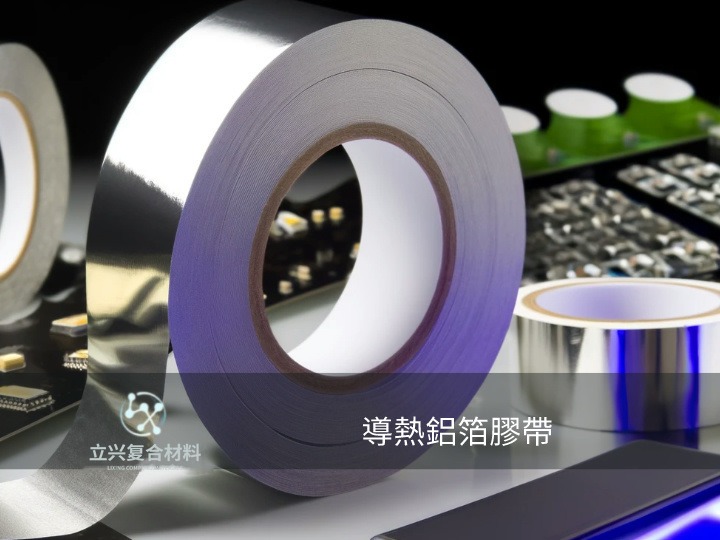
H-TT-AL Aluminum Thermal Conductive Tape is rated for an operating range of -30°C to 150°C, so one tape can cover everything from cold storage to a high-temperature bake. To keep it bonded across that span, estimate the expansion mismatch between the foil and the substrate with the linear thermal expansion formula, check the length of each continuous strip, and ask for adhesion data at your target temperatures.
Four Benefits of One Tape Rated from -30°C to 150°C
One material for the cold end and the bake
H-TT-AL is rated for -30°C to 150°C, and the product page describes it as suited to conditions from deep cold to high-temperature baking. A device that starts up in a cold environment, or an assembly that goes through a bake after bonding, can be evaluated with the same Aluminum Thermal Conductive Tape, so you qualify one material instead of two.
0.100 mm total thickness keeps the assembly gap unchanged
The aluminum facestock is 0.060 ± 0.003 mm, the adhesive layer 0.040 ± 0.003 mm and the total thickness 0.100 ± 0.005 mm, supplied on a 0.055 mm transparent PET release film. Tight notebook and tablet enclosures do not need extra clearance when the application moves to a wider temperature range.
0.45 W/(m·K) helps even out hot spots
The product page lists a thermal conductivity of 0.45 W/(m·K) and says the tape helps balance hot-spot temperatures. It does not state the test method, pressure or specimen thickness. ASTM D5470 is the steady-state method for thermal transmission properties of thin thermally conductive electrical insulation materials, so confirm that two tapes were measured under the same conditions before comparing their numbers. Method details are covered in our ASTM D5470 testing standard article, and the interface side of the heat path in the aluminum foil tape thermal interface contact guide.
Three adhesion figures you can compare directly
The product page lists 0.6 kg/25mm annular initial tack, 1.5 kg/25mm adhesion to plate and 24 hours of holding. None of the three states a test temperature, so if the tape will spend long periods near -30°C or 150°C, ask for data at those temperatures or confirm with thermal cycling on real parts. What each figure covers is explained in reading tack, peel and holding for aluminum foil thermal tape.
How Much the Foil Moves: A Linear Expansion Estimate
The foil and the substrate each expand by their own coefficient, and the difference ends up in the 0.040 mm adhesive layer between them. The order of magnitude can be estimated with the linear approximation in OpenStax University Physics Volume 2, 1.3 Thermal Expansion:
ΔL = α × L × ΔT
- ΔL: change in length, mm
- α: coefficient of linear expansion, 1/°C; OpenStax lists aluminum at 25×10⁻⁶, iron or steel at 12×10⁻⁶ and ordinary glass at 9×10⁻⁶
- L: length of one continuous strip, mm
- ΔT: temperature change, °C
For a 100 mm strip heated from -30°C to 150°C (ΔT = 180°C), aluminum expands freely by about 0.45 mm, steel by about 0.22 mm and glass by about 0.16 mm. On a steel part the foil and substrate differ by about 0.23 mm; on the back of a glass panel by about 0.29 mm; on an aluminum heat sink the coefficients match and the difference is close to zero. Longer strips and larger temperature swings put more relative movement on the adhesive at the strip ends.
The formula applies to homogeneous materials over a range where α can be treated as constant. OpenStax notes that α varies slightly with temperature and the constant approximation is most accurate for small changes. The model leaves out adhesive viscoelasticity, substrate restraint and curvature, so it compares designs by order of magnitude only; it cannot predict tape life and is not a product performance guarantee.
Where a Wide Operating Range Helps
The product page lists LED strips and high-power fixtures, notebooks and tablets, touch panels and LCD modules, and securing heat sinks in power conversion equipment and transformers. These parts warm up in operation and return to ambient when switched off. Strips on aluminum heat sinks see little mismatch, while strips on steel or glass are worth a quick estimate with the formula above. Full specifications are on the H-TT-AL product page.
What to Prepare Before Asking for a Quote
- Upper and lower operating temperatures, and the dwell time at the hot end
- Substrate material, for example aluminum, steel, glass or plastic
- Length and width of each continuous strip
- The temperatures at which you need adhesion or thermal data
Request Samples or a Specification Review
With those four items ready, check the specifications on the Aluminum Thermal Conductive Tape H-TT-AL product page and contact Lixing Composite Materials Co., Ltd. at yw@zh-lx.com or on LINE/WeChat jerryhuang to request samples for thermal cycling on your own parts.
#AluminumFoilThermalTape #ThermalTape #OperatingTemperature #ThermalExpansion #LEDCooling