
Fiberglass Thermal Tape for -20 to 120°C: Heat Transfer and Fixing Through Hot and Cold Operation
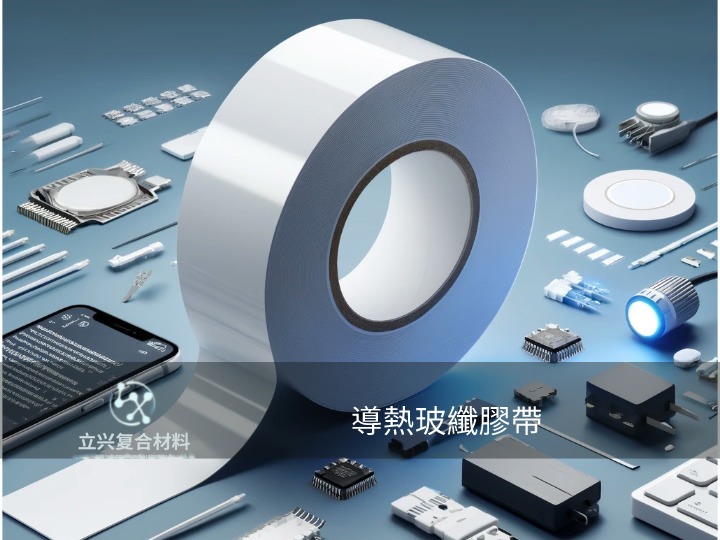
The H-GT-WH Fiberglass Thermal Conductive Tape is rated for -20°C to 120°C, which suits LED luminaires and power modules that swing between cold start and full load: one 0.095 mm tape handles heat transfer, insulation and fixing. Before selecting it, match your lower and upper operating temperatures, the materials on both sides of the bond and the bonded length against that range, then run one thermal expansion estimate to see whether the tape fits your assembly.
-20°C to 120°C: One Tape for Cold Starts and Hot Running
The product page lists an operating temperature of -20°C to 120°C and states that the tape keeps stable performance in both high and low temperature environments. If an outdoor luminaire switching on in winter and a power supply running at high load both stay inside that window, one part number covers the whole span, with no separate fixing material for the cold and hot ends.
A Fiberglass Face Stock Supports the 0.095 mm Layer
Expansion and contraction pull on the bond again and again, and a thin tape's own tensile strength decides whether it distorts during cutting and lamination. This tape uses fiberglass as the face stock; the product page says the fiberglass base gives good structural strength and tensile resistance, suited to automated application. Face stock is 0.050 mm, adhesive 0.045 mm, and total thickness 0.095 ± 0.005 mm.
Insulation Stays in the Same Layer as Temperatures Move
Power devices and heat sinks in a power module often need both a heat path and electrical isolation. The product page lists 5 kV withstand voltage and 0.35 W/(m·K) thermal conductivity, so one layer covers the heat path and the isolation, with one less insulating sheet to stack. Creepage, clearance and hipot testing of the finished unit still follow the applicable product standard.
Adhesion Figures You Can Compare Against Your Load Case
The product page gives 0.5 kg/25mm loop tack and 24 H holding power. Tack governs whether the tape stays where it is placed, and holding power reflects whether it creeps under sustained load. Both figures come from the product page conditions, so adhesion at your hot and cold extremes needs sample testing at those temperatures.
Where It Fits: Heat Sources That Cycle Hot and Cold
- High-power LED modules and luminaire fixing: switching and day-night swings heat and cool the aluminum board repeatedly.
- Power supplies and heat sinks: load changes move component temperature up and down.
- Cooling parts inside notebooks and tablets: in thin enclosures, a 0.095 mm tape is easy to fit.
- Touch panels and LCD modules: glass bonded to metal frames calls for a look at expansion mismatch.
All four uses appear in the application list on the Fiberglass Thermal Conductive Tape product page, so you can compare them with your own layout.
Estimating Expansion Mismatch with the Linear Thermal Expansion Equation
Equation: ΔL = α × L × ΔT (source: OpenStax University Physics Volume 2, 1.3 Thermal Expansion).
- ΔL: change in length, mm
- α: coefficient of linear expansion, 1/°C; OpenStax lists aluminum 25×10⁻⁶, copper 17×10⁻⁶ and ordinary glass 9×10⁻⁶
- L: original length along the bond, mm
- ΔT: change in temperature, °C
When both sides are the same material, such as an aluminum board on an aluminum heat sink, α is equal and free expansion stays nearly in step, so the adhesive mainly sees differences caused by temperature gradients. With different materials, work out the difference. For 100 mm of ordinary glass bonded to an aluminum frame heated from -20°C to 120°C (ΔT = 140°C), aluminum grows about 0.35 mm and glass about 0.126 mm, a gap of about 0.22 mm, more than four times the 0.045 mm adhesive thickness. A 20 mm copper-based component on an aluminum heat sink with a 100°C swing gives a gap of about 0.016 mm. The closer the gap comes to the adhesive thickness, or the further it exceeds it, the more you should shorten continuous bond lengths or run hot-cold tests on samples.
Applicability and limits: the equation estimates free elongation of rigid parts under a uniform temperature change, and OpenStax notes that α varies only slightly with temperature, so a constant α is adequate for most practical spans. It ignores constraint stress, temperature gradients, adhesive viscoelasticity and fatigue. It is an engineering estimate, not a specification, lifetime or thermal-cycling guarantee for this tape.
Under What Conditions Was 0.35 W/(m·K) Measured?
The 0.35 W/(m·K) thermal conductivity on the product page does not state the test method, pressure or specimen thickness. Before comparing it with another thermal tape, confirm both values were measured with the same method and conditions, for example the steady-state ASTM D5470 method commonly used for thermal interface materials.
Temperature Data to Prepare Before Requesting Samples
Please send your ambient low limit, component surface temperature at full load, the materials and bonded length on both sides, and any thermal cycling or high-temperature storage acceptance requirement. If your operating temperature falls outside -20°C to 120°C, this tape is outside its recommended range and another heat-resistant material should be evaluated.
Related reading on the same tape: bonding stability and heat-sink fixing and 5 kV withstand voltage in a thin insulating layer.
Request Samples and Specification Support
If you need thermal fixing that holds up through hot and cold operation in LED luminaires, power supplies or portable electronics, check the specifications on the H-GT-WH product page or email yw@zh-lx.com for samples. Lixing Composite Materials Co., Ltd. provides specification support and samples; there is no online checkout.
#FiberglassThermalTape #ThermalTape #LEDCooling #PowerSupplyCooling #ThermalExpansion