
Thin Green Silicone Sheet With a UL 94 V-0/V-1 Flame Rating: Reading It for Hot Press and Electronics Use
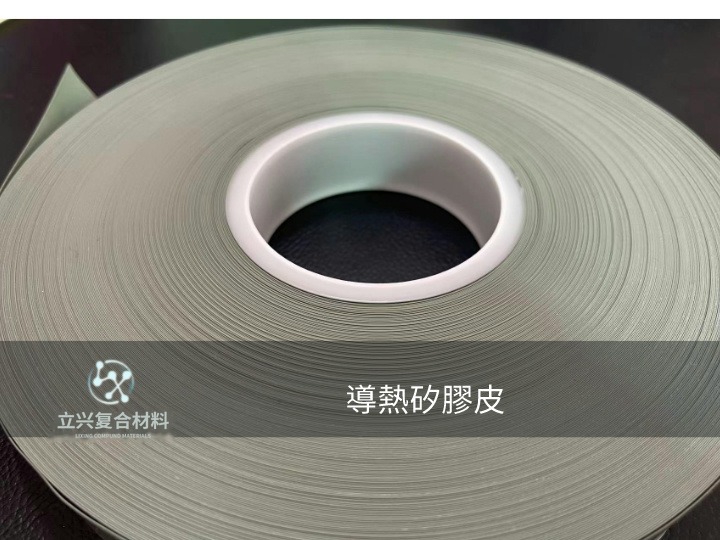
The Thin Green Silicone Sheet product page lists a UL 94 V-0/V-1 flame rating, so a sheet placed under a hot-press head or at a heat-dissipation point brings a classified limit on how long it keeps burning after the flame is removed. Before selecting it, confirm three things: whether the 0.26 mm thickness you order corresponds to V-0 or V-1, whether flame test or UL documentation exists for that thickness, and which level your end-product safety standard requires.
An Extra Flame Rating Where the Press Runs Hot
In LCM hot-press bonding the sheet sits against a heated head cycle after cycle, so a process safety review will ask how the material behaves in a flame. The specification table for the Lixing Thin Green Silicone Sheet lists a UL 94 V-0/V-1 flame rating and describes the material as insulating, heat conducting and fire resistant, which gives the review a classified value it can cite.
200 °C Continuous, 340 °C Momentary
The product page lists an operating range of -40 to 200 °C and a momentary rating of 340 °C. Short overshoots in press temperature control stay within the listed momentary range, while sustained design should stay at or below 200 °C; the flame rating does not extend that limit.
Flame Rating and Over 4 kV Withstand Voltage in One Thin Sheet
The same sheet lists withstand voltage of 4 kV or more (ASTM D149), which suits press and heat-dissipation points that need both fire behavior and electrical isolation reviewed. How to read that voltage value and its electrode conditions is covered in the earlier article on 4 kV withstand voltage for thin hot-press sheets.
Heat Still Moves Through 0.26 mm
Standard thickness is 0.26 mm and the listed thermal conductivity is 1.5 W/m·K by ASTM D5470. The page does not state the test pressure or specimen thickness, so confirm both with the supplier before comparing that value with other sheets.
Thickness and Roll Width Matched to Your Press
The standard roll is 0.26 mm thick, 50 m long and 300 mm wide, and thickness (from 0.26 mm), color and dimensions can be customized. The surface is powder free and does not bleed oil under pressing, which suits direct contact with FPC, IC and glass.
V-0 Versus V-1: Total Afterflame in the UL 94 Vertical Burn
The UL 94 vertical test burns a set of five specimens, applies a flame twice for 10 seconds each, records how long each keeps burning after the flame is removed, and adds the results. The criterion below is taken from the UL94 Standard Operating Procedures of the University of Texas Fire Research Group:
t_total = Σ(i=1..5) (t1,i + t2,i); V-0: each t1,i and t2,i ≤ 10 s, t_total ≤ 50 s; V-1: each ≤ 30 s, t_total ≤ 250 s
- t1,i: afterflame time of specimen i after the first flame application, in s
- t2,i: afterflame time of specimen i after the second flame application, in s
- t_total: sum of t1 and t2 for the five specimens in one conditioning set, in s
- t3: afterglow time after the second application; V-0 requires t2 + t3 ≤ 30 s, V-1 allows up to 60 s
Neither level allows burning or glowing up to the holding clamp, and flaming drips must not ignite the cotton below. The UT procedure uses 125 mm × 13 mm × 3.175 mm specimens, with one set conditioned at 23 °C and 50% RH for 48 hours and one set tested as received. The result is a small-specimen laboratory classification tied to specimen thickness and conditioning. It does not predict how a finished assembly burns and is not a specification or guarantee for this product; certification follows the current UL 94 edition and its documents. For background on how flame-retardant fillers work in thermal pads, see our overview of flame retardancy in thermal pads.
Where It Fits
The product page names hot-press bonding of LCM displays and heat conduction and temperature regulation in semiconductors. Both positions sit near heat sources or energized parts, so the flame rating, withstand voltage and thermal data can be reviewed together in one material assessment.
What to Send With Your Inquiry
- The flame rating your end-product safety standard requires, V-0 or V-1
- The thickness you will use, and whether a flame test report or UL document covers it
- Press temperature profile, dimensions and roll width
Send these details to yw@zh-lx.com or request samples and a specification consultation through the Thin Green Silicone Sheet product page. Lixing will reply with the documentation available for your thickness.
#ThinGreenSiliconeSheet #UL94 #FlameRating #HotPress #LCMBonding