
Polyimide Gold Finger Tape Rated 8 kV: Reading Insulation Specs on a 0.065 mm Film
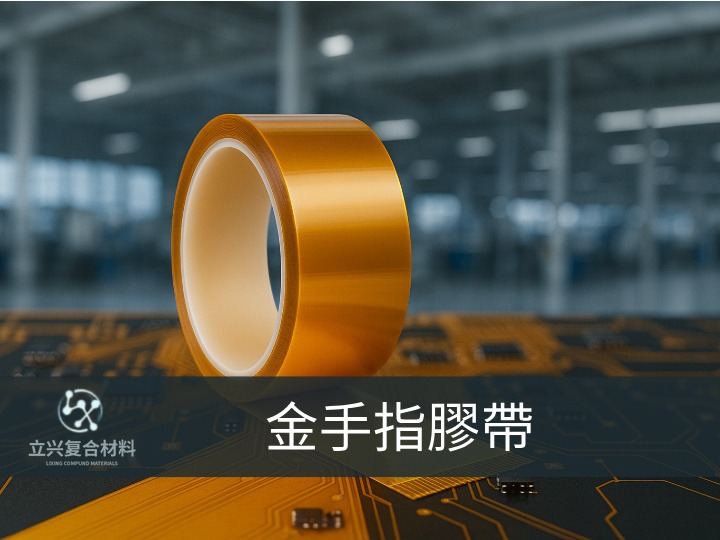
If your PCB plating or paint-masking step also needs a layer of electrical insulation, YD-08-YL polyimide gold finger tape for plating masking delivers a rated withstand voltage of ≥ 8 kV and a surface resistivity of ≥ 10^13 Ω at a total thickness of 0.065 mm. Those are the three specs buyers check first: withstand voltage, surface resistivity and the 0.065 ± 0.005 mm thickness tolerance. Check them against your working voltage and application method, then request samples to test.
A 0.065 mm film rated at ≥ 8 kV
A thin film saves space, and its voltage rating comes with a stated test method. The product page lists a 0.025 mm polyimide film substrate with a high-temperature silicone pressure-sensitive adhesive, a 0.065 mm total thickness and a withstand voltage of ≥ 8 kV measured to GB/T 8554-1993. The full table is on the gold finger tape specification page. Tight spots next to gold fingers or component fixing points suit a single film that handles masking and insulation together.
Surface resistivity of ≥ 10^13 Ω keeps surface leakage low
Surface resistivity describes how strongly a material resists current flowing along its surface. The product page rates this tape at ≥ 10^13 Ω (ASTM D4496); the higher the value, the smaller the current that flows across the tape surface at a given voltage. Where the tape bridges two neighbouring conductors and the surface must stay insulating, this is the number to compare. Real leakage also depends on humidity and surface contamination, so confirm it on the assembly.
Acid, alkali and solvent resistance keeps the masking layer intact
If the tape breaks down during processing, the insulation goes with it. The product page states that the tape resists acids, alkalis, solvents and chemical agents, and holds 260°C for 30 minutes without deforming (304 mirror steel test), with no adhesive residue on removal. For boards that are plated, painted or baked before assembly, those two conditions help the masking layer survive the process.
Tensile strength of ≥ 40 MPa, and why flat application matters
The product page lists tensile strength of ≥ 40 MPa, elongation at break of ≥ 50% and a stable inner and outer peel force of ≥ 100 g/5mm, so the tape resists breaking during application and rewinding and stays consistent on automated laminating lines. Application quality is tied directly to insulation. Bubbles or wrinkles under the film change the real insulation thickness between conductors and concentrate the local field.
PCB plating, paint masking and component fixing
The listed uses are PCB process masking, high-temperature spray painting and baked coating, and fixing electronic components. During gold finger plating, the tape covers areas that must stay unplated. During painting or baking, it keeps coating off contacts that must stay conductive. When it holds a component in place, the polyimide film adds an insulating layer between conductor and part. For heat resistance and clean removal, see the earlier article on gold finger tape at 260°C for 30 minutes.
Why withstand voltage has to be read with thickness
Engineers estimate the average field inside an insulating layer with the uniform-field relation:
E = V / d
E is the average electric field strength in the insulation (V/m or kV/mm), V is the voltage difference across the layer (V or kV), and d is the insulation thickness between the two conductors (m or mm). The same voltage across a thinner film gives a higher field, so a rating such as 8 kV only means something together with the thickness and method used to measure it. Source: OpenStax College Physics 2e, section 19.2.
The relation holds only for an evenly thick, well-bonded layer between roughly parallel conductors; sharp conductor corners, board edges, bubbles or wrinkles all raise the local field. ASTM D149 also notes that dielectric breakdown results can seldom be used directly to predict behavior in an actual application, and that results vary with the voltage ramp and test environment. This section explains a principle; it is not a product specification or guarantee.
What to prepare before asking for a quote
- Working voltage and any transient voltage you expect
- Conductor spacing at the taping position and the tape width you need
- Process conditions: plating bath or solvent type, plus bake temperature and time
- Whether you laminate automatically, and the roll format you need
The product page lists no UL or other third-party certification and gives no dielectric strength (kV/mm) or volume resistivity figures. If your design needs them, validate representative samples at your real voltage and environment.
Request samples or a spec review
With those conditions in hand, you can judge quickly whether YD-08-YL fits your masking and insulation needs. See the full specifications on the polyimide gold finger tape product page, or email yw@zh-lx.com to request samples or discuss specifications.
#PolyimideTape #GoldFingerTape #ElectricalInsulation #PCBMasking #WithstandVoltage