
TO-220 Silicone Cap for -40 to +180°C: Wall Thickness, Hardness and Expansion Fit
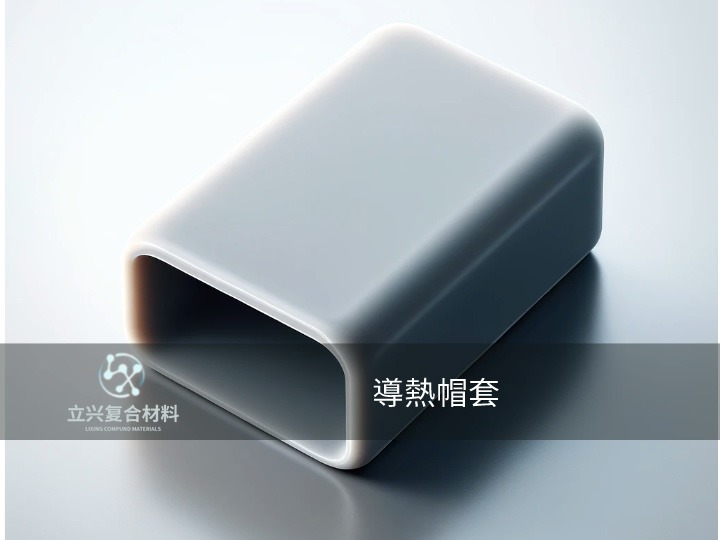
Lixing's Heat Conductive Silicone Cap is rated for -40 to +180°C operation, so one cap covers a TO-220 device from a cold enclosure to the heat of a loaded component. Check four items in this order: the package code and its wall thickness (0.5 mm for TO-220A/B/C, 0.8 mm for TO3PB), hardness of Shore A 70±5, the temperature range against your enclosure, and the ASTM D5470 conditions behind the 0.8 to 1.0 W/m·K conductivity figure. Then request a sample for a thermal cycling check on your own hardware.
One cap for the full -40 to +180°C operating window
An outdoor power cabinet can sit below freezing on a winter morning, and the same power device warms up quickly once it carries load. The physical property table on the Heat Conductive Silicone Cap product page lists an operating temperature of -40 to +180°C, with GB/T 3512-2014 in the test method column, and the product description states stable long-term operation across that range. Designers work from one specification at both ends of the range, which keeps part numbering simple.
Silicone elasticity leaves room for expansion mismatch
The cap sits between the device and the heat sink, and each of those materials grows and shrinks by a different amount with temperature. The cap's hardness is Shore A 70±5 (ASTM D2240), elongation is above 160% and tensile strength is above 20 kgf/cm² (ASTM D412). It suits fits where an elastic material needs to take up small dimensional differences.
The product page does not list a linear expansion coefficient for this silicone, so confirm the actual fit with a sample across your equipment's temperature range.
Check insulation and flammability data against the same range
Wide-temperature designs often review insulation and flammability documents separately from the temperature range. The property table lists dielectric withstand above 4 kV (ASTM D149), a UL 94 V-0/V-1 flammability rating, and RoHS compliance for the full series. These are typical values, and the page gives no dielectric data at elevated temperature; if your end product has safety requirements, state the operating temperature and voltage conditions in your enquiry.
0.8 to 1.0 W/m·K: read the D5470 conditions first
The cap carries device heat to the heat sink, with a catalog conductivity of 0.8 to 1.0 W/m·K measured by ASTM D5470. Thermal resistance from this method changes with applied pressure and specimen thickness, and the product page does not list either condition. Ask us for the test conditions before comparing figures from different suppliers.
Five standard package sizes, thickness by code
- TO220A: 12.5 × 11.5 × 5.9 mm (L × W × H), 0.5 mm thick
- TO220B: 16 × 11.5 × 5.9 mm, 0.5 mm thick
- TO220C: 21.8 × 12.1 × 5.9 mm, 0.5 mm thick
- TO3PA: 28.5 × 17.5 × 5.9 mm, 0.5 mm thick
- TO3PB: 28.8 × 18.2 × 6.6 mm, 0.8 mm thick
Sizes, colors and physical parameters can be customized for special package outlines; confirm the code against the cap specification table.
Estimating the mismatch with linear thermal expansion
The length change of a part over a temperature swing can be estimated with the linear thermal expansion equation: ΔL = α · L₀ · ΔT. ΔL is the change in length (mm), α is the coefficient of linear expansion (1/°C), L₀ is the initial length (mm) and ΔT is the temperature change (°C).
Table 1.2 in OpenStax University Physics Volume 2, section 1.3 Thermal Expansion gives α as 25×10⁻⁶ /°C for aluminum and 17×10⁻⁶ /°C for copper. Using the 21.8 mm length of a TO220C cap and a 220°C swing (-40 to +180°C), aluminum grows about 0.12 mm and copper about 0.08 mm, a difference of roughly 0.04 mm.
Treat these numbers as an order of magnitude only. The linear form is an estimate over such a wide swing, the textbook table lists no α for silicone or rubber, and the equation ignores stress, compression set and ageing. It is not a specification or guarantee for this cap; the real fit is confirmed by sample testing.
Where a wide-temperature cap fits
The product page lists diodes, transistors, electronic sensing components and electrical parts as applications, with the cap providing heat dissipation, insulation and physical protection. For equipment in outdoor power cabinets or industrial control cabinets with large day and night swings, screen first against the -40 to +180°C range and then confirm fit and temperature rise with a sample.
What to send with an enquiry
- Device package code and actual outline dimensions
- Low and high ambient temperatures of the equipment, plus the expected case temperature
- Required dielectric withstand and flammability rating
- Quantity, and whether custom colors or sizes are needed
Request samples or a specification review
To handle heat and insulation for TO-220 devices across a wide temperature range, review the full property table on the Heat Conductive Silicone Cap page, email yw@zh-lx.com, or call +886 905 198 368 (Taiwan) or +86 139 2690 8508 (mainland China); LINE/WeChat: jerryhuang. For reading the flammability rating next to the D5470 figure, see how to compare UL 94 and D5470 data for a TO-220 silicone cap.
#HeatConductiveSiliconeCap #TO220 #WideTemperature #ThermalExpansion #ThermalManagement