
Phonon Transport Theory
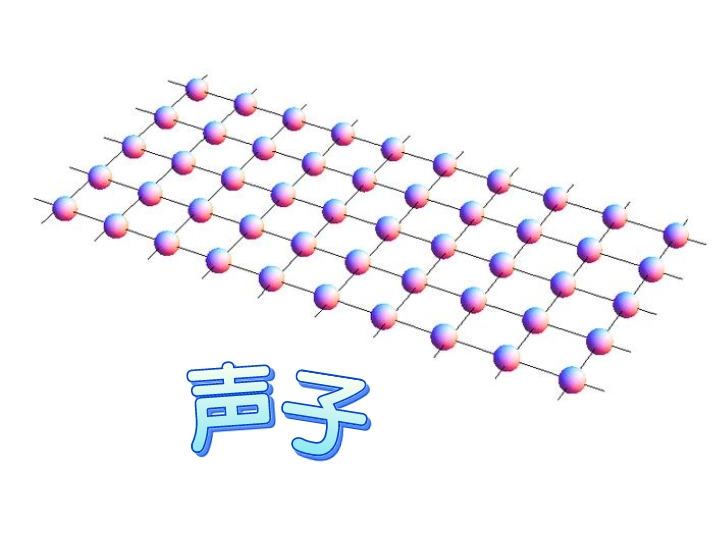
Phonon transport theory is an important part of solid-state physics, describing wave propagation and energy transfer in crystals. Atoms or molecules in a solid are generally arranged in a lattice. Their vibrations transfer energy through waves described in terms of phonons.
Phonons describe collective motion in a solid. They are quantized vibrational modes with specific energy and momentum. Their behavior is described by a dispersion relation linking energy and momentum.
Phonon transport theory considers lattice vibrational modes to describe wave propagation in crystals. Transport properties can be explained through phonon scattering and interactions. Scattering transfers energy and momentum, affecting macroscopic properties such as thermal and electrical conductivity.
Phonon transport theory is important in materials science and solid-state physics. It explains thermal transport, phonon scattering, and the temperature dependence of thermal conductivity, and supports the design and optimization of thermoelectric materials. Combined with electronic structure theory and thermodynamics, it helps describe the physical properties of solids.